Do You Need a Remote for Small Under-Cabinet LED Light Bars?
A practical explainer for specifying small under-cabinet LED bars with remote control, covering bar format, power and receiver placement, siting, dimming and limits.
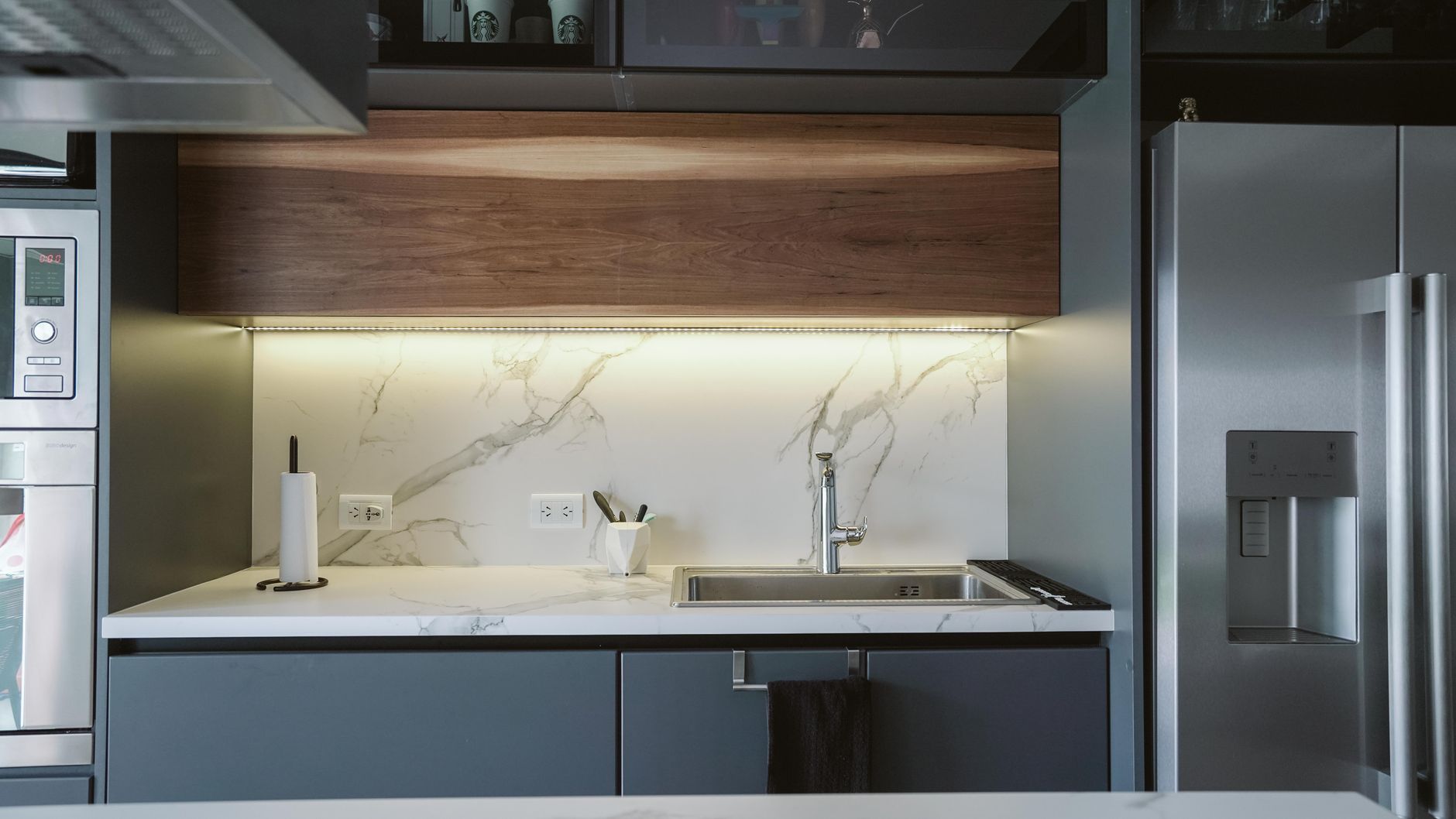
A remote control small under cabinet LED light bar is a short linear light under a wall cabinet, switched and dimmed by a hand-held remote instead of a wall switch. Search results mix two different product types: consumer battery or USB-rechargeable bars and project-grade, wired LED strip or rigid light bars in a slim profile. This article compares the control decision; for HHY project specifications, focus on the wired strip, profile, driver and compatible controller as one system. The remote is the visible feature, but it is rarely the deciding one. Bar format, power path, receiver location, cable route and low-end dimming determine whether the control feels convenient or becomes daily friction.
Key Takeaways
- Self-contained battery bars and low-voltage strip-in-channel bars have different mounting, service and cable-routing rules.
- Remote control suits reversible installs, awkward switching and grouped dimming; frequent daily use often favors a switch or sensor.
- Decide by power path, receiver reach, cable hiding, service access and low-end dimming before comparing handsets.
What Remote Control Small Under Cabinet LED Light Bars Actually Covers
The phrase is often used as if it describes one product. In practice, it splits into two families with different installation logic.
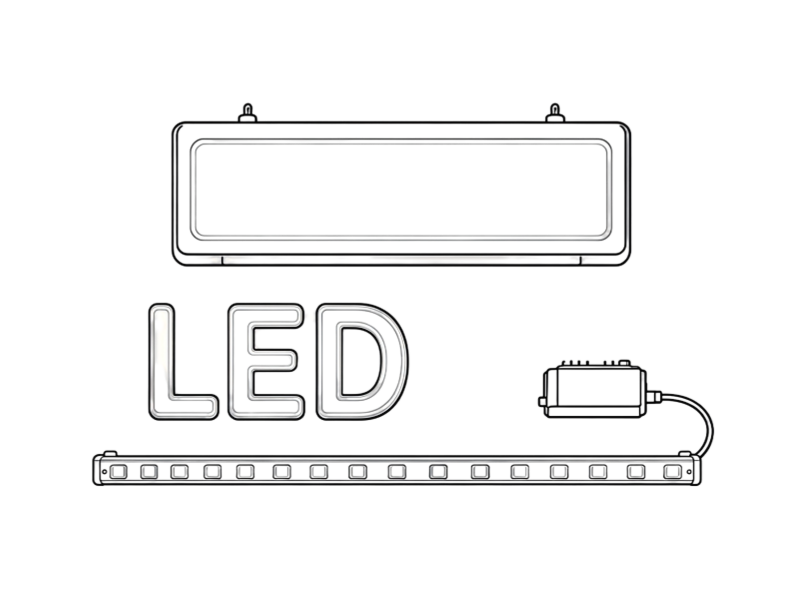
A self-contained rechargeable or battery bar includes the battery, receiver and light engine in one housing. It needs no external driver and can be attached under a cabinet with adhesive or screws, but it must be removed or opened for charging and service. A low-voltage strip-in-channel or rigid bar uses a separate power supply and receiver. It can deliver a more architectural look and can be grouped across several bars, but it depends on a route for low-voltage cable and a serviceable place for the driver and receiver. "Small" usually means a bar sized to a single cabinet run, not a full kitchen perimeter. The control method is the least important variable at the start; bar format is the most important because it decides mounting, cable routing, heat exposure, service access and whether the handset can reach the receiver.
Where a Remote Earns Its Place and Where It Becomes Friction
The remote is a convenience feature, so judge it by task frequency and switching convenience rather than by product quality.
Remote control earns its place in rented or leased kitchens where adding a wall switch is not permitted, retrofits with no wall cavity, cabinet runs where a switch would land in an awkward spot, several bars that need grouped dimming, and occasional accent lighting. Remote control also helps when the bar is an accent layer rather than primary task lighting. It is weaker where the light is used many times a day, because a lost handset or a flat battery becomes friction. A door switch or hand-wave sensor is often faster for daily access, and an existing switched circuit that already reaches the cabinet makes a remote unnecessary. None of this is about quality; it is about whether the control method matches the routine. For a contractor or distributor, the useful question is not "Does the customer want a remote?" but "How often will this light be switched, and by whom?"
Configuration Choices That Decide the Result
The result is decided before the handset is paired: format, power and grouping set the ceiling on what the installation can do.
Start with bar format and profile depth. A shallow channel with a diffuser may hide diodes at standing eye height; a deeper or recessed profile can shield glare but may not fit under a cabinet lip. Voltage and driver arrangement come next: the driver must live where it is serviceable and ventilated, not where it is buried behind a finished panel. Receiver placement should be decided with the handset in hand. Single-colour fixed white is simpler; adjustable white adds tuning but also more control logic and potential points of confusion. Check dimming at the low end, because under-cabinet light is often used at night. Grouping matters: one receiver per bar gives independent control and redundancy; one receiver driving several bars simplifies grouping but means one failure affects the run. Connector and cable type must pass between cabinets without strain, and any exposed cable should have a deliberate route rather than a taped shortcut.
Installation, Siting, and Control Reliability
The under-cabinet zone is not uniform, and the handset is only reliable when its receiver can be reached by the chosen signal.
Under-cabinet siting
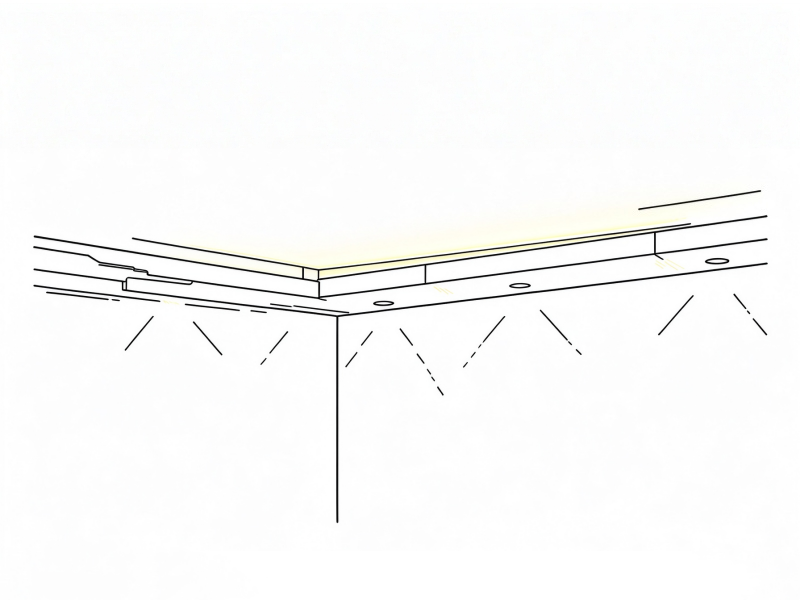
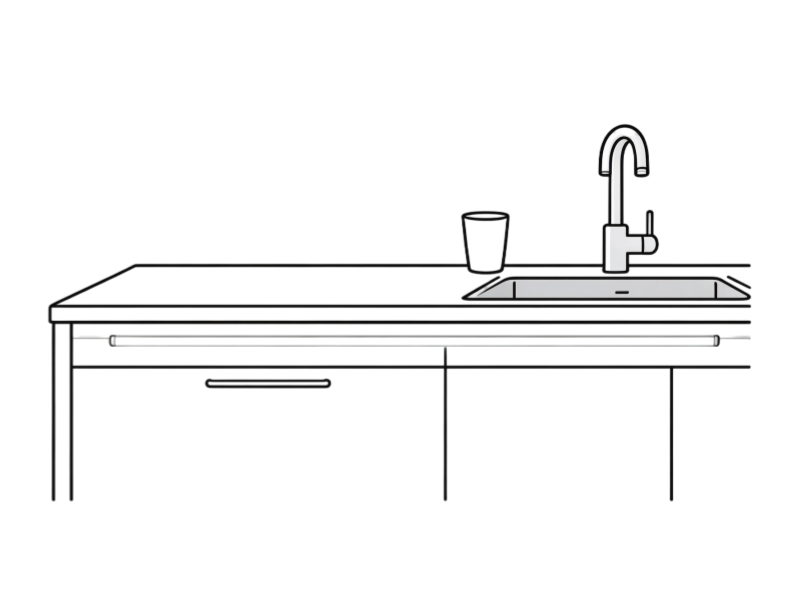
Near a cooktop, heat, grease and cleaning change the constraints; near a sink, moisture and splashes matter. The front lip or valance decides whether the bar is visible or shielded. Mounting surface matters too: finished wood, melamine and metal rail behave differently, and adhesive is a poor choice on greasy or dusty undersides. Plan the cable route from bar to driver to power, and decide whether it can be hidden behind the cabinet or must be clipped along the underside. On rechargeable bars, confirm that the battery compartment or charging port can be reached without dismantling the installation.
Handset behaviour
Infrared handsets need a clear path to the receiver; radio handsets do not, but they may respond through a cabinet door or from another room, so pairing and channel discipline matter. Re-pairing should be possible after a battery change or replacement. Neighbouring installations can share a handset if channels are not separated. A remote is also a single point of failure, so consider a receiver with a manual button, an inline switch or another fallback where the product provides one.
Practical Limits, Counter Light, and a Short Decision Path
The limits are ordinary and should be stated before the bar is chosen.
Battery bars lose output as the cell drains and need charging; wired bars need a power path that may not exist. Adhesive fails on contaminated undersides, heat near a cooktop shortens the life of anything mounted there, and inexpensive handsets are rarely interchangeable between brands. Counter light depends on position along cabinet depth: too far back and the work zone is dim; too far forward and the diodes or a bright reflection can meet standing eye height. Warm white is a residential preference, not a rule. Dimming quality at the bottom of the range matters more than maximum output for late-evening use.
- What is the task, and how often is it switched?
- Is a switched circuit already within reach?
- Can the bar be wired, or must it be self-contained?
- Where can the receiver sit, and can the remote reach it?
- How will the cable be hidden, and can the bar be serviced or charged?
- Does low-end dimming suit the room?
Go back to the cabinet with a tape measure and answer the first question before choosing a handset: how often will this light be switched? If the honest answer is many times a day, every day, a switch or sensor is usually the better daily control, even if a remote remains useful for setup or occasional dimming. If the installation is reversible, has no convenient switching, or needs grouped dimming, remote control small under cabinet led light bars can be the practical choice. That is a design decision, not a compromise.
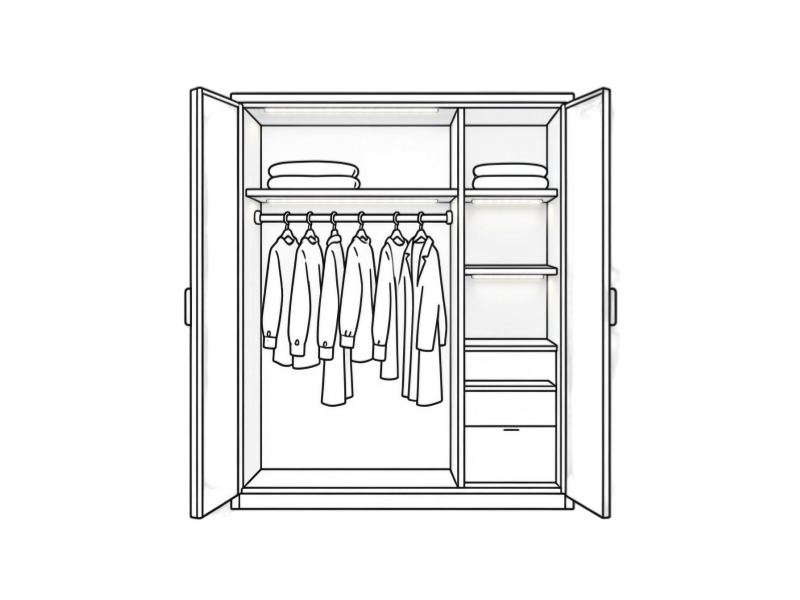
For a built-in cabinet project, start with the cabinet and furniture lighting solution, then select a suitable LED strip family and verify the controller and driver as a matched system.